Triggers
When the game opens, players choose what kind of trouble the city is in for. The choice sets which failures turn up, and nothing more: what happens after the first one depends on what players do about it. Degradation and neglect is the default, because it is the trouble a city has without anybody trying.
Degradation and neglect
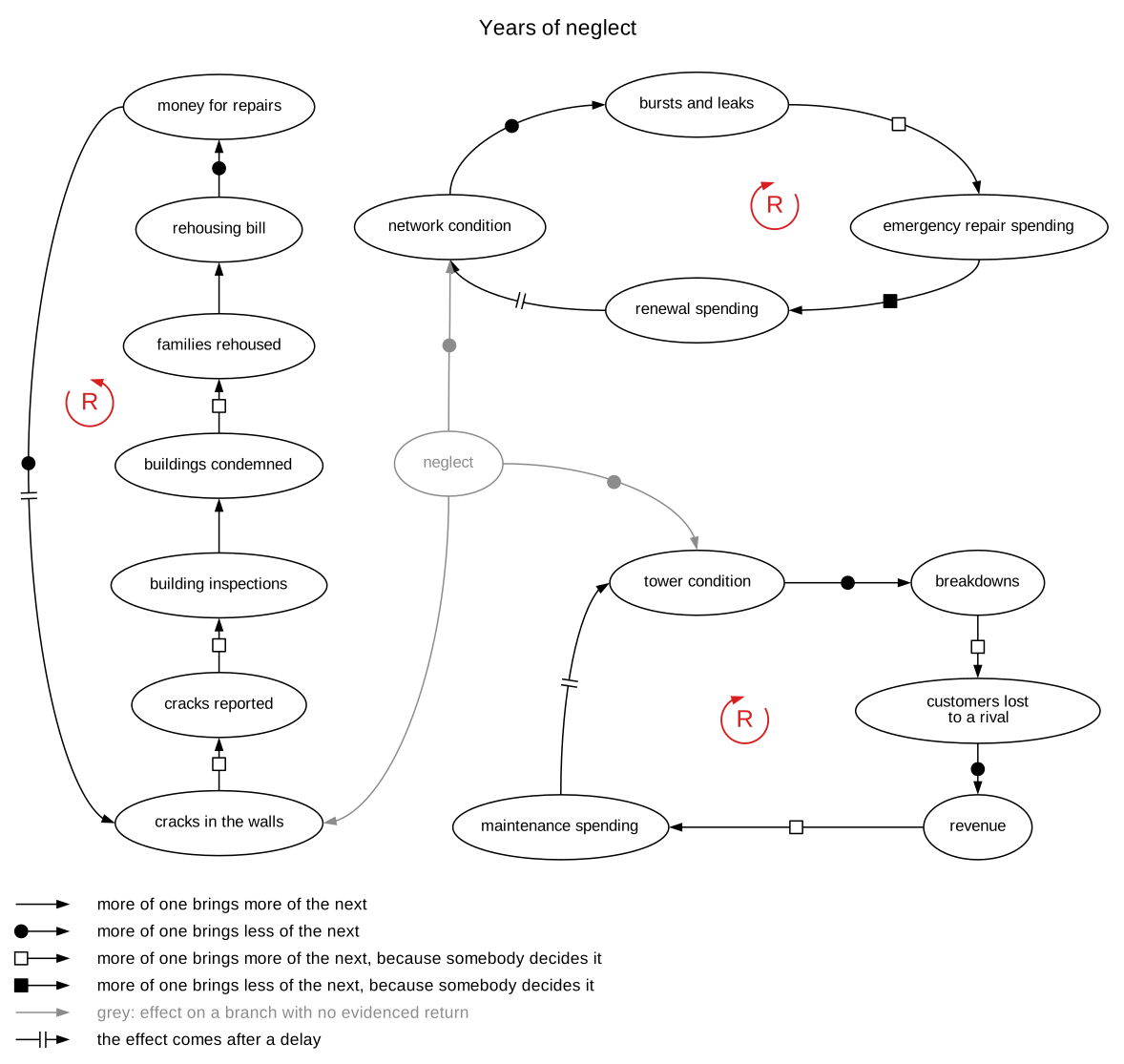
Pipes, towers and walls wear out whether anyone is watching or not, and the money for renewing them goes on mending the ones that broke. France renews its water mains at a pace that would take some 165 years to get round them. The Grand Trunk cut maintenance until its towers stopped working out of habit, and the tenants of rue d’Aubagne reported their cracks for years before the walls came down. Each repair takes the money that would have prevented the next.
Click to enlarge.
The three loops
Reinforcing (R):
less renewal spending -> worse network condition, after a delay -> more bursts and leaks -> more emergency repair spending -> less renewal spending
less maintenance spending -> worse tower condition, after a delay -> more breakdowns -> more customers lost to a rival -> less revenue -> less maintenance spending
more cracks in the walls -> more cracks reported -> more building inspections -> more buildings condemned -> more families rehoused -> a bigger rehousing bill -> less money for repairs -> more cracks in the walls, after a delay
Operational error
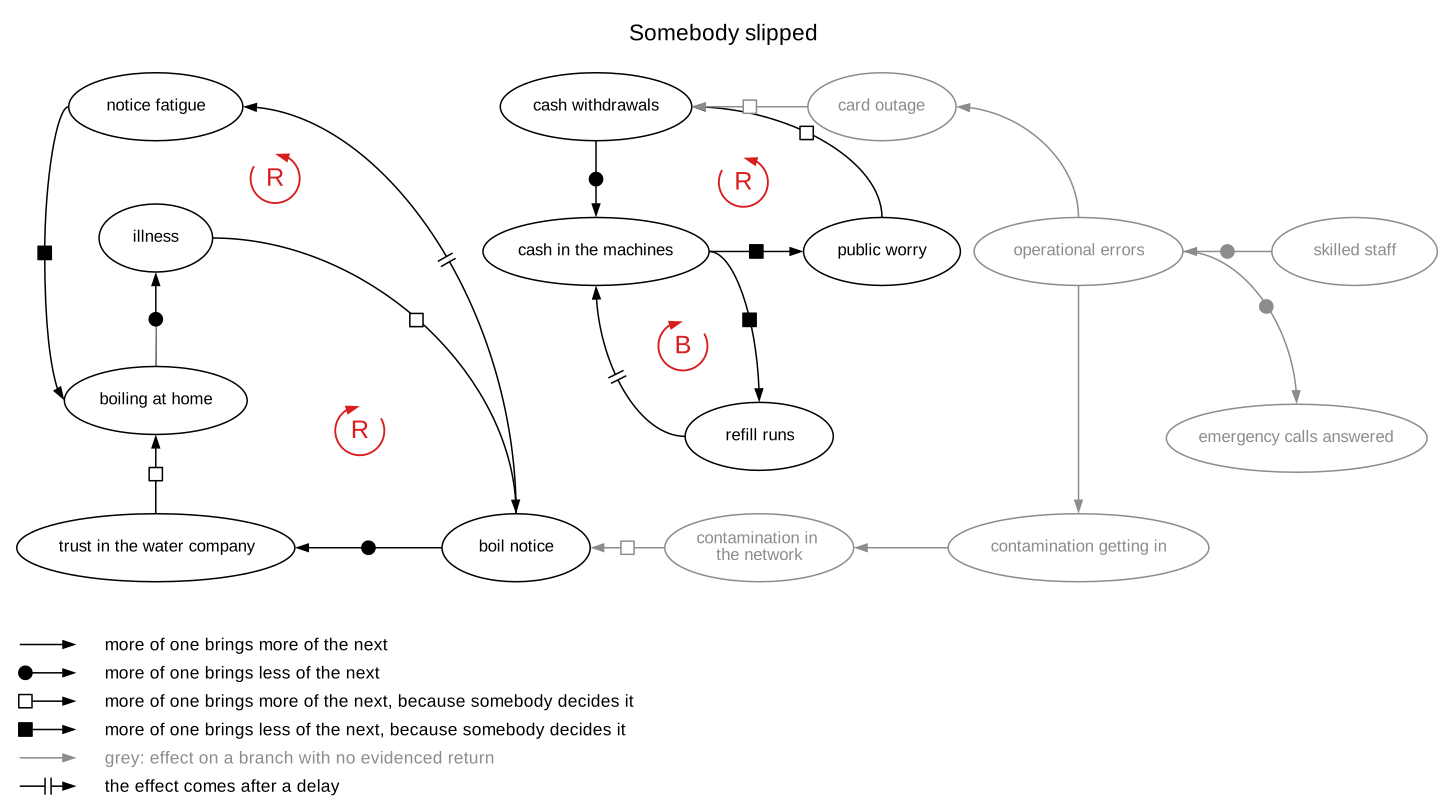
Somebody updates the wrong thing. Orange added capacity to its network and the French emergency numbers went quiet for an evening. An expired certificate stopped card terminals across Germany for weeks. At Leixlip four alarms went unanswered one evening, and some 600,000 people boiled their water. Errors come more often where skilled staff are scarce, and low wages keep them scarce.
Click to enlarge.
The four loops
Reinforcing (R):
more cash withdrawals -> less cash in the machines -> more public worry -> more cash withdrawals
a boil notice -> less trust in the water company -> less boiling at home -> more illness -> the boil notice stays
a boil notice -> more notice fatigue, after a delay -> less boiling at home -> more illness -> the boil notice stays
Balancing (B):
less cash in the machines -> more refill runs -> more cash in the machines, after a delay
Supplier failure
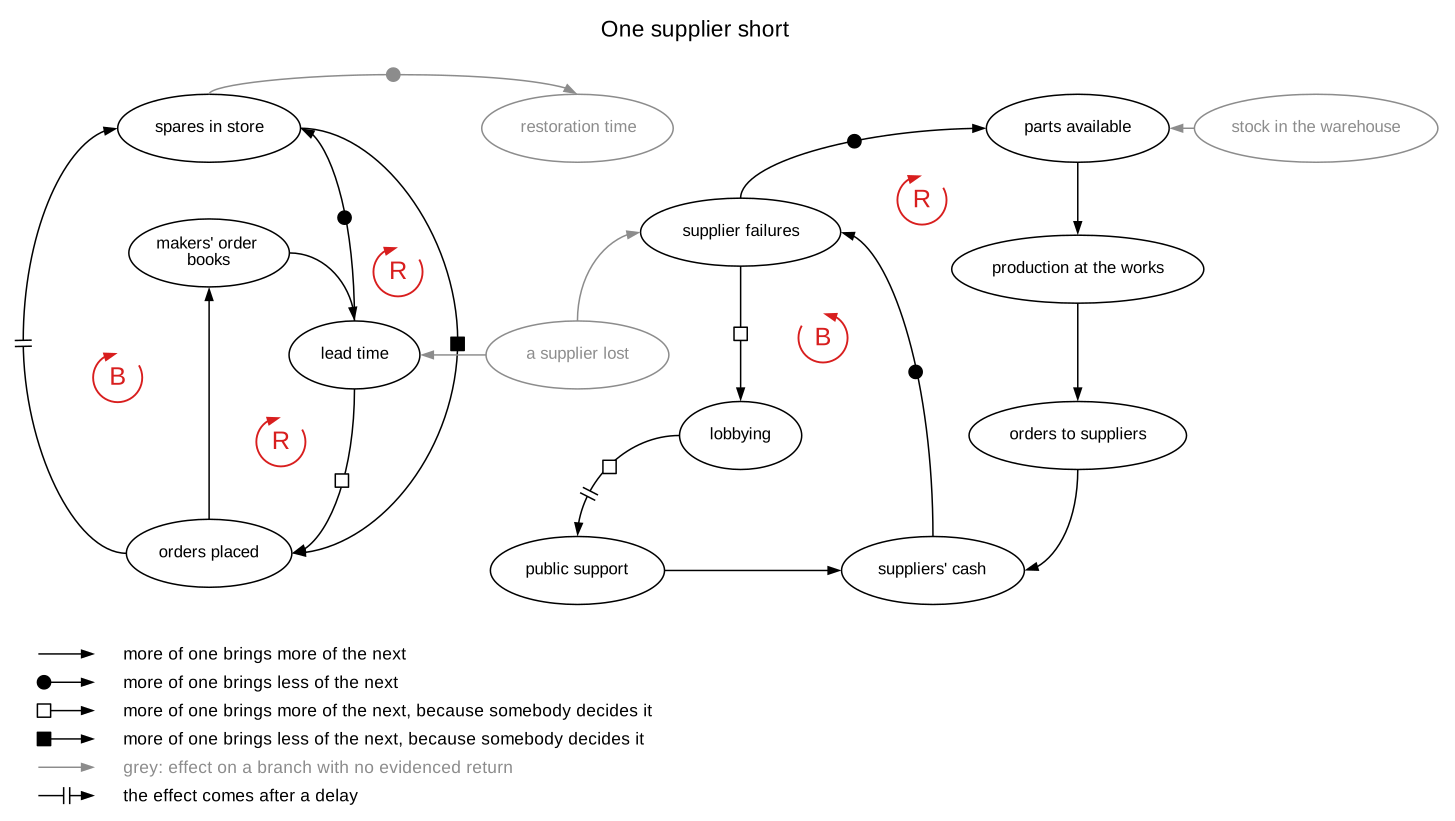
A city that buys from one supplier finds out what it bought when the supplier stops. When Jaguar Land Rover stopped, its suppliers had weeks of cash at most. Transformers come from a handful of factories, and the wait for one now runs to years. One lost supplier takes others with it, and every company that orders early to be safe makes the wait longer for the rest.
Click to enlarge.
The five loops
Reinforcing (R):
less production at the works -> fewer orders to suppliers -> less suppliers’ cash -> more supplier failures -> fewer parts available -> less production at the works
more orders placed -> fuller makers’ order books -> a longer lead time -> more orders placed
a longer lead time -> fewer spares in store -> more orders placed -> fuller makers’ order books -> a longer lead time
Balancing (B):
more supplier failures -> more lobbying -> more public support, after a delay -> more suppliers’ cash -> fewer supplier failures
fewer spares in store -> more orders placed -> more spares in store, after a delay
Crime
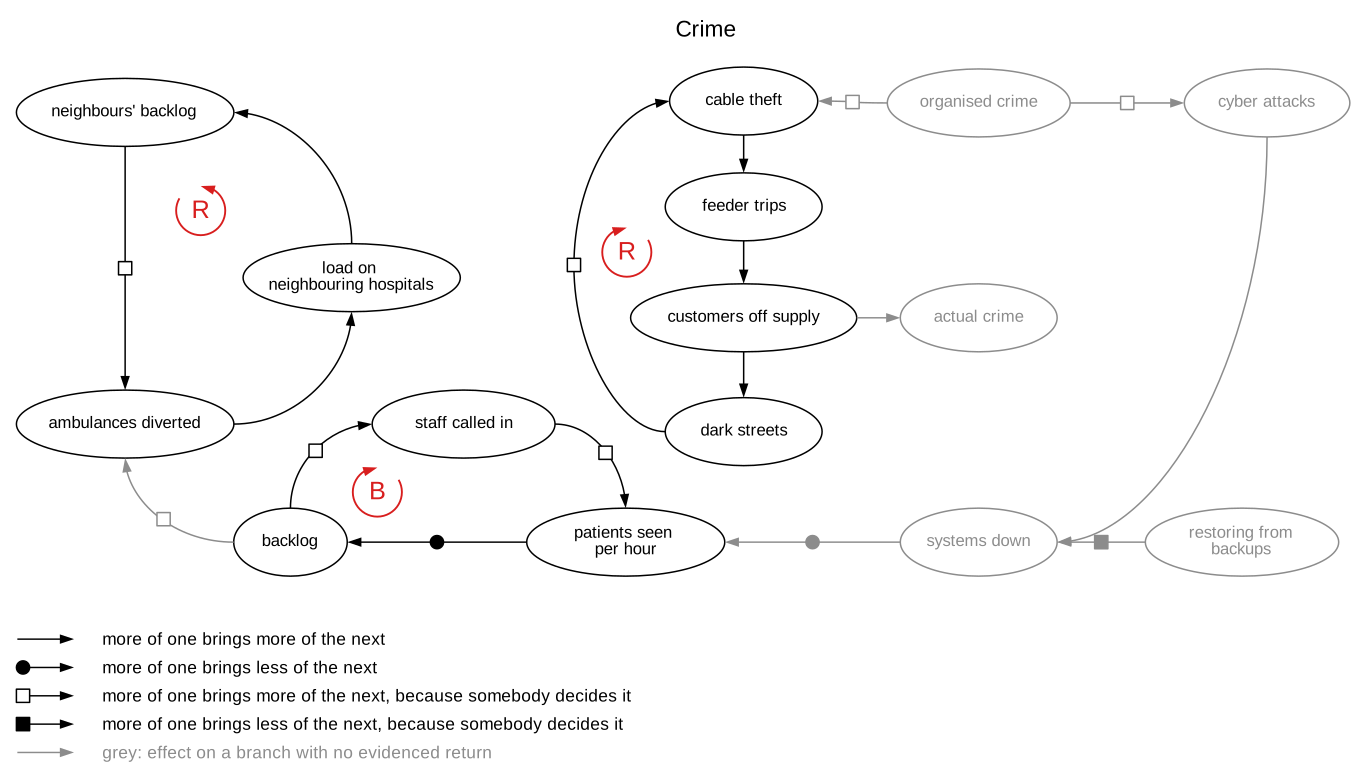
Crime goes where the money is and where the lights are not. Ransomware has shut hospitals in Duesseldorf, London and across Ireland, and sent their ambulances to neighbours who soon had queues of their own. Copper cable fetches a fine price on a dark street, and every length stolen makes the street darker.
Click to enlarge.
The three loops
Reinforcing (R):
more ambulances diverted -> more load on neighbouring hospitals -> a bigger neighbours’ backlog -> more ambulances diverted
more customers off supply -> darker streets -> more cable theft -> more feeder trips -> more customers off supply
Balancing (B):
a bigger backlog -> more staff called in -> more patients seen per hour -> a smaller backlog
Protest and sabotage
A guild with a grievance can shut the market, and somebody with a grudge can cut a cable. German farmers drove their tractors to Berlin and won back their diesel refund. An arson attack on the grid left some 45,000 households in Berlin without power for days, and somebody who knew the railway cut its radio cables and stopped the trains of northern Germany. Every protest that wins teaches the next trade to protest.
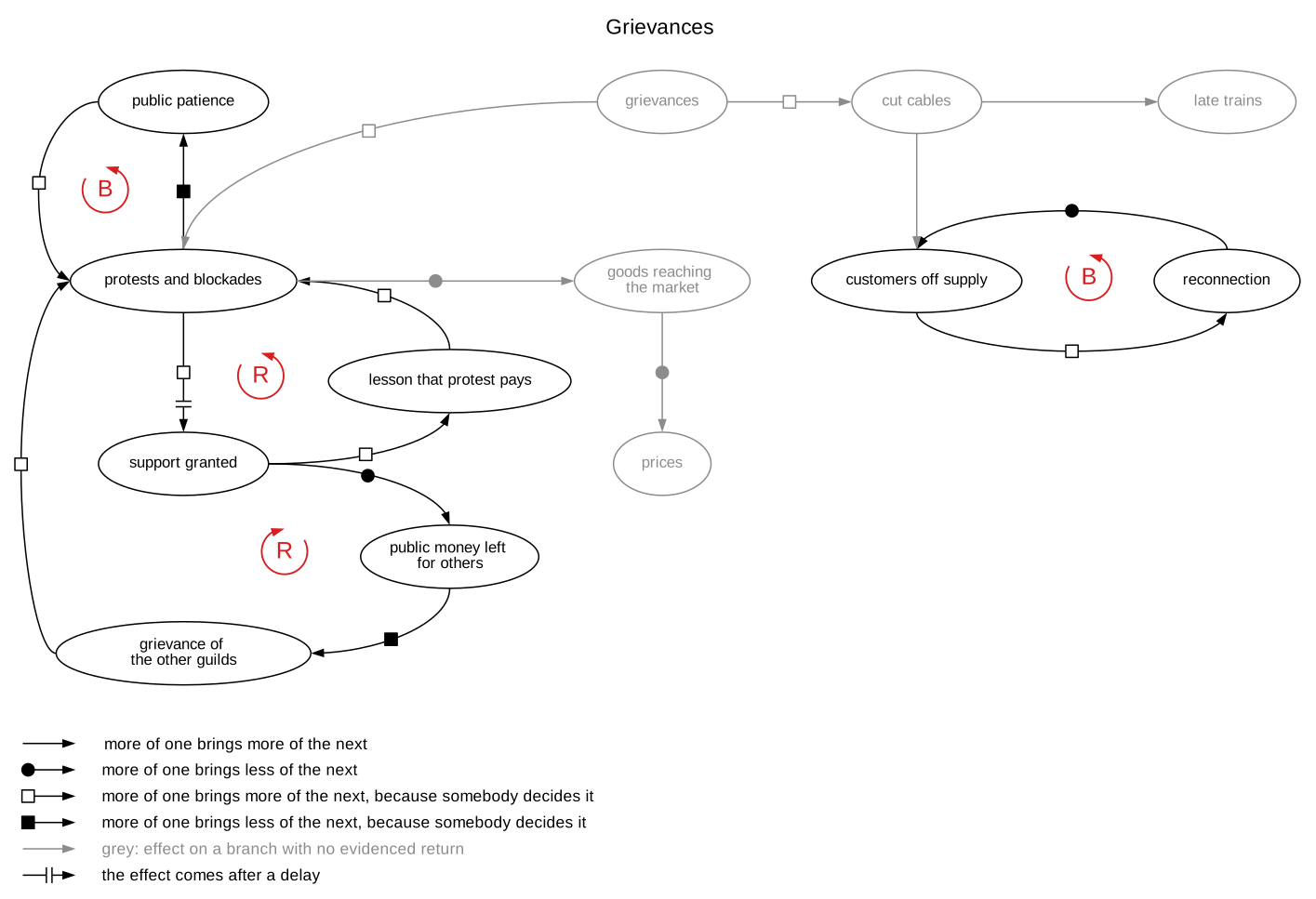
Click to enlarge.
The four loops
Reinforcing (R):
more protests and blockades -> more support granted, after a delay -> more belief that protest pays -> more protests and blockades
more protests and blockades -> more support granted, after a delay -> less public money left for others -> more grievance among the other guilds -> more protests and blockades
Balancing (B):
more protests and blockades -> less public patience -> fewer protests and blockades
more customers off supply -> more reconnection -> fewer customers off supply
Hostile states
Some outages are not meant to do much damage. A dam valve in Norway was opened from somewhere else, a tanker was suspected of dragging its anchor across the Baltic seabed, and modems were wiped on the morning of an invasion. Each was small, and each tested how fast the city noticed and whom it blamed. Attribution arrives late, if at all.
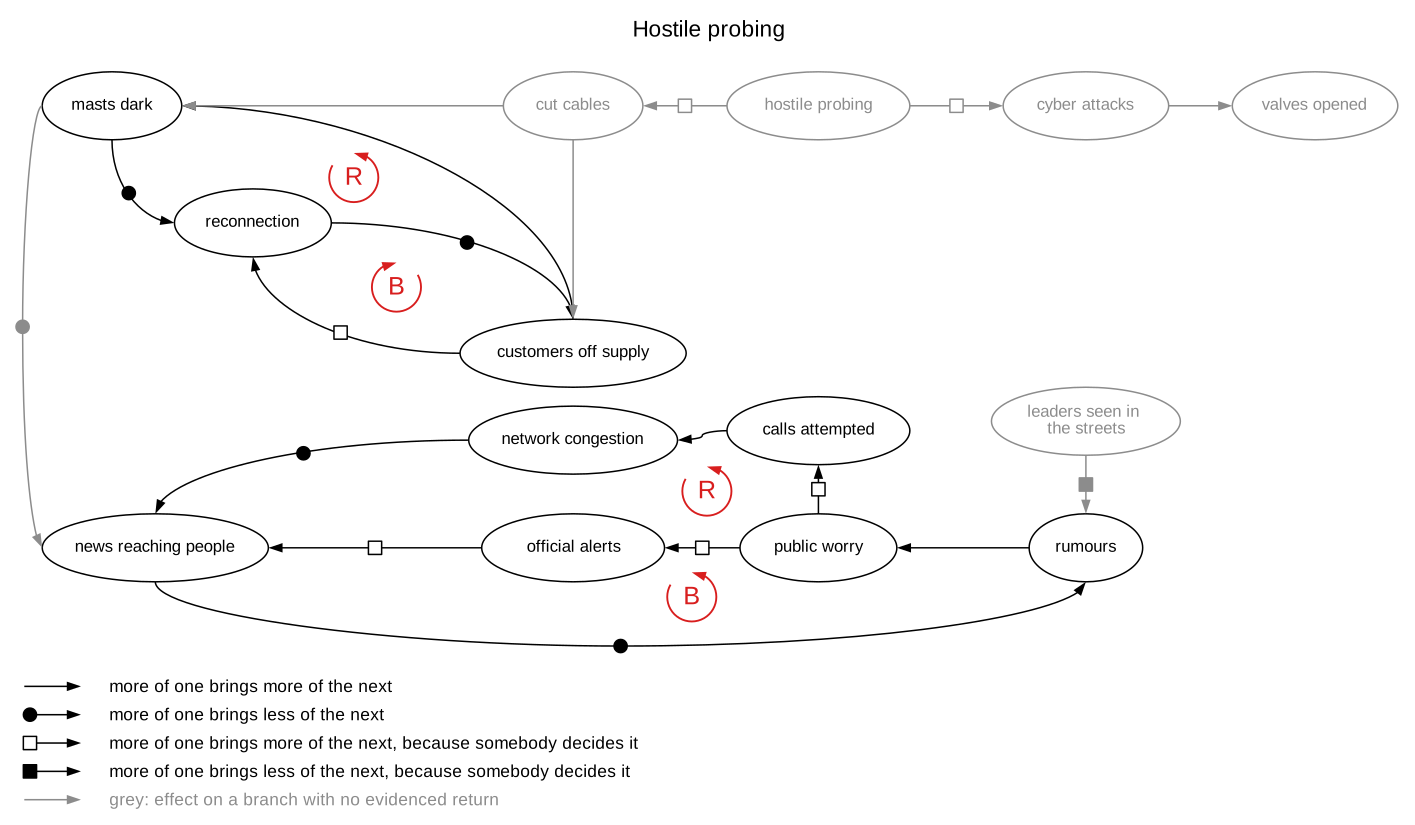
Click to enlarge.
The four loops
Reinforcing (R):
more customers off supply -> more masts dark -> less reconnection -> more customers off supply
less news reaching people -> more rumours -> more public worry -> more calls attempted -> more network congestion -> less news reaching people
Balancing (B):
more public worry -> more official alerts -> more news reaching people -> fewer rumours -> less public worry
more customers off supply -> more reconnection -> fewer customers off supply