The sorting office
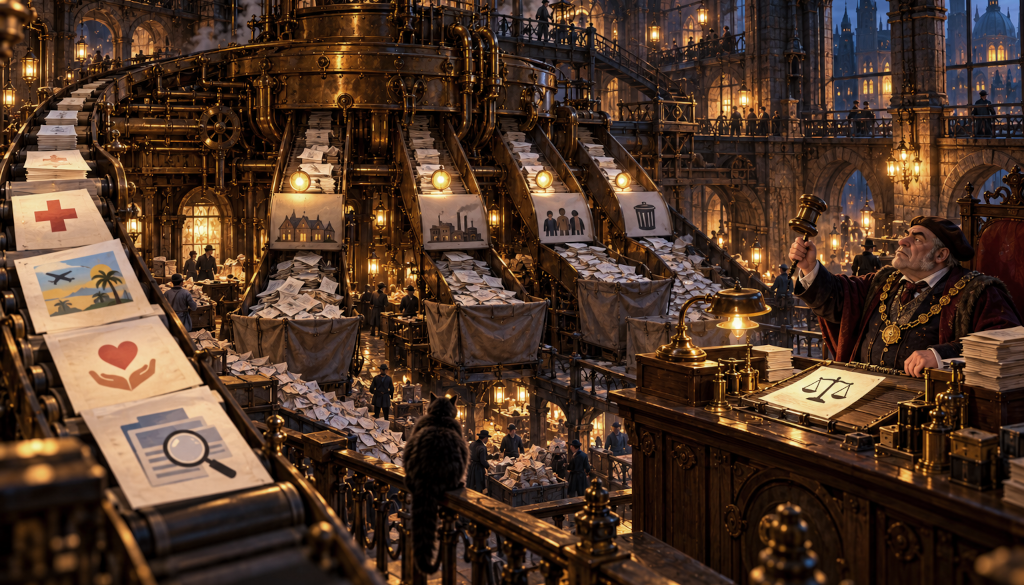
An alert fires and a prescriber dismisses it. A passenger’s booking is run past a rule before the flight lands. A charity applies for a bank account. A query runs across a few million documents and returns a few thousand.
Somebody is left holding the judgement in each of those, and answering for it afterwards. None of them chose what arrived in front of them. A sensitivity was set, a criterion written, a category drawn or a search term typed, usually some time earlier and by somebody in a different building.
A system that never makes a final decision can determine the outcome by deciding what reaches a person. Nothing in the arrangement records that as a decision, which is what makes it hard to appeal, hard to audit, and easy to describe afterwards as a technicality.
Disclaimer
This file was assembled by choosing what to put in it, and the choosing appears nowhere in the pages that follow. The clerks have considered the matter and elected to press on.