Things that flow
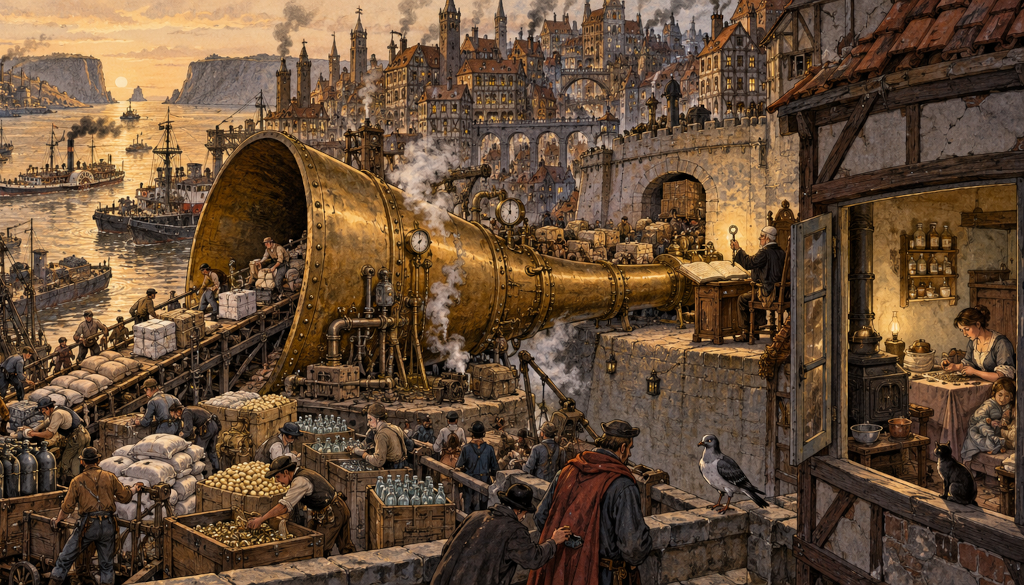
Europe runs on things that arrive from somewhere else: gas, fertiliser, metals, chips, medicines, and the ships and rivers that carry them. Most of the time the flow is invisible, and a disruption first shows up as a price. When a flow is cut, the system usually finds a way through. Stocks are drawn down, a richer buyer outbids a poorer one, a factory pauses, a ship takes the long way round. It survives, and it rarely returns to where it was. The stock is lower, the supplier has changed, the plant has gone, and part of the cost has moved to somebody who never bought the goods.
What if these things get cut off by distance, blockade or exhaustion?